Lawfare is a non-profit multimedia publication dedicated to “Hard National Security Choices.” We provide non-partisan, timely analysis of thorny legal and policy issues through our written, audio, and other content—all of which you can find here. We strive to achieve academic-level depth with magazine-level readability at the pace of news. We aim to improve the discourse on the law and policy of national security with a relentless focus on substantive issues that matter—in a fashion that is useful to policymakers and practitioners, but also accessible to anyone who wants to access it. Our areas of coverage range from national security law, threats to democracy, cybersecurity, executive powers, content moderation, domestic extremism, and foreign policy, among many others.
Lawfare Daily Playlist
Lawfare Daily: Gulf Countries Hedging Amid Iran War Debacle
Lawfare Public Service Fellow Julia Curlee talks with former CIA analyst Shawn Howard and Ariane Tabatabai of the Chicago Council on Global Affairs about Shawn’s new Foreign Policy essay on …how the Gulf states are coping with a war they didn’t start. They discuss why U.S. protection has made the Gulf states targets, how Tehran sees them, Iran’s strikes on the mediators, the possibility of a UAE side deal, and what a post-midterm return to U.S. bombing would mean for the region.
Mentioned in this episode:
Shawn A. Howard, “Gulf States Are Hedging and Suffering,” Foreign Policy
Julia Curlee and Ariane Tabatabai, “How Could Iran Happen? An Autopsy,” Foreign Policy
To receive ad-free podcasts, become a Lawfare Material Supporter at http://www.patreon.com/lawfare 🏛️. You can also support Lawfare by making a one-time donation at https://givebutter.com/lawfare-institute 🏛️.Show More
Lawfare Daily: Gulf Countries Hedging Amid Iran War Debacle
Lawfare Public Service Fellow Julia Curlee talks with former CIA analyst Shawn Howard and Ariane Tabatabai of the Chicago Council on Global Affairs about Shawn’s new Foreign Policy essay on how the Gulf states are coping with a war they didn’t start. They discuss why U.S. protection has made the Gulf states targets, how Tehran sees them, Iran’s strikes on the mediators, the possibility of a UAE side deal, and what a post-midterm return to U.S. bombing would mean for the region. Mentioned in …
Lawfare Public Service Fellow Julia Curlee talks with former CIA analyst Shawn Howard and Ariane Tabatabai of the Chicago Council on Global Affairs about Shawn’s new Foreign Policy essay on …how the Gulf states are coping with a war they didn’t start. They discuss why U.S. protection has made the Gulf states targets, how Tehran sees them, Iran’s strikes on the mediators, the possibility of a UAE side deal, and what a post-midterm return to U.S. bombing would mean for the region.
Mentioned in this episode:
Shawn A. Howard, “Gulf States Are Hedging and Suffering,” Foreign Policy
Julia Curlee and Ariane Tabatabai, “How Could Iran Happen? An Autopsy,” Foreign Policy
To receive ad-free podcasts, become a Lawfare Material Supporter at http://www.patreon.com/lawfare 🏛️. You can also support Lawfare by making a one-time donation at https://givebutter.com/lawfare-institute 🏛️.Show More
Lawfare Daily: ‘Crossing the Red Line’ in Gaza with Akbar Shahid Ahmed
On today’s episode, Lawfare Managing Editor Tyler McBrien sat down with Akbar Shahid Ahmed, the diplomatic correspondent at The Washington Sun to discuss Ahmed’s new book “Crossing the Red Line: Biden, His Advisors, and Israel’s War in Gaza.” They talked about the top officials in the administration who drove Biden’s Gaza policy, how the war quickly became a moral and strategic disaster, and what the heavy civilian death toll might augur for the future. https://wwnorton.com/books/9781324118190
On today’s episode, Lawfare Managing Editor Tyler McBrien sat down with Akbar Shahid Ahmed, the diplomatic correspondent at The Washington Sun to discuss Ahmed’s new book “Crossing the Red Line: …Biden, His Advisors, and Israel’s War in Gaza.” They talked about the top officials in the administration who drove Biden’s Gaza policy, how the war quickly became a moral and strategic disaster, and what the heavy civilian death toll might augur for the future.
https://wwnorton.com/books/9781324118190 🏛️Show More
Lawfare Daily: The Trump-Xi Summit and U.S.-China AI Competition
Martin Chorzempa is the Dennis Weatherstone Senior Fellow at the Peterson Institute for International Economics and a leading U.S. expert on China’s economy and tech sector. In this week’s episode, Peter and Martin unpack President Trump’s September 24 summit with Chinese Leader Xi Jinping, talk about the balance of leverage in the geopolitical and economic relationship, and unpack the countries’ differing perspectives on—and approaches to—artificial intelligence. Martin also discusses some …
Martin Chorzempa is the Dennis Weatherstone Senior Fellow at the Peterson Institute for International Economics and a leading U.S. expert on China’s economy and tech sector. In this week’s episode, …Peter and Martin unpack President Trump’s September 24 summit with Chinese Leader Xi Jinping, talk about the balance of leverage in the geopolitical and economic relationship, and unpack the countries’ differing perspectives on—and approaches to—artificial intelligence. Martin also discusses some of his current research into Chinese open weight AI models, which American companies are using with increasing frequency across a range of business applications.
Peter and Martin also discuss Martin’s recent paper arguing that China’s efforts to internationalize the RMB are stalling out.
This episode is part of the Security Economics podcast series, in which Peter Harrell and guests explore the intersection of economics and national security, how countries manage their economies to support national security, and how they deploy economic tools in support of geopolitical objectives.
To receive ad-free podcasts, become a Lawfare Material Supporter at http://www.patreon.com/lawfare 🏛️. You can also support Lawfare by making a one-time donation at https://givebutter.com/lawfare-institute 🏛️.Show More
Lawfare Daily: The Remaking of the Department of Defense
On today’s podcast, Executive Editor Natalie Orpett sits down with Rachel VanLandingham, a professor at Southwestern Law School and a retired Lt. Colonel in the U.S. Air Force, to talk about the many ways in which the Trump administration has been remaking DoD. Some changes are announced loudly—the ban on transgender service members and the so-called “High-T” initiative—while others are taking place through quiet bureaucratic moves, like changes to personnel management. But all are …
On today’s podcast, Executive Editor Natalie Orpett sits down with Rachel VanLandingham, a professor at Southwestern Law School and a retired Lt. Colonel in the U.S. Air Force, to talk …about the many ways in which the Trump administration has been remaking DoD. Some changes are announced loudly—the ban on transgender service members and the so-called “High-T” initiative—while others are taking place through quiet bureaucratic moves, like changes to personnel management. But all are combining to reshape the U.S. armed forces according to a new vision. They talk about how these changes are being implemented, what’s rhetoric and what’s reality, and what impact it’s all having on the Department and the troops themselves.
To receive ad-free podcasts, become a Lawfare Material Supporter at http://www.patreon.com/lawfare 🏛️. You can also support Lawfare by making a one-time donation at https://givebutter.com/lawfare-institute 🏛️.Show More
Lawfare Daily: Did Washington Walk Into Beijing’s Trap? Xi’s State Visit with Jonathan Czin
Lawfare Public Service Fellow Julia Curlee sits down with Jonathan Czin, the Michael H. Armacost Chair in Foreign Policy Studies and fellow in the John L. Thornton China Center at the Brookings Institution, to unpack Xi Jinping’s state visit to Washington, his first in 11 years. The two former CIA and National Security Council colleagues discuss what each side walked away with, including a two-month extension of the trade truce and potential channels on artificial intelligence and military …
Lawfare Public Service Fellow Julia Curlee sits down with Jonathan Czin, the Michael H. Armacost Chair in Foreign Policy Studies and fellow in the John L. Thornton China Center at …the Brookings Institution, to unpack Xi Jinping’s state visit to Washington, his first in 11 years.
The two former CIA and National Security Council colleagues discuss what each side walked away with, including a two-month extension of the trade truce and potential channels on artificial intelligence and military crisis communications. They look at the implications for Taiwan, the war in Iran, and how the loss of China expertise and policy staff showed in the summit’s preparation and readouts.
For further reading, see:
Jonathan Czin, “What Trump Doesn’t Understand About Xi,” The Atlantic: https://www.theatlantic.com/international/2026/09/trump-xi-china-negotiation/688600/ 🏛️
The White House fact sheet on the state visit: https://www.whitehouse.gov/fact-sheets/2026/09/fact-sheet-president-donald-j-trump-advances-a-fair-and-reciprocal-relationship-with-china-while-hosting-historic-state-visit/ 🏛️
Xinhua’s summary of the visit’s eight outcomes: https://www.chinadaily.com.cn/a/202609/26/WS6ab77bc2e4b06d4aa0560579.html 🏛️
To receive ad-free podcasts, become a Lawfare Material Supporter at http://www.patreon.com/lawfare 🏛️. You can also support Lawfare by making a one-time donation at https://givebutter.com/lawfare-institute 🏛️.Show More
Lawfare Daily: The Policy Implications of the AI Vibe Shift
Lawfare Senior Editor Kevin Frazier is joined by Scaling Laws co-host Assemblyman Alex Bores of New York, AVERI Director of U.S. Policy Nat Purser, and Institute of Law and AI Managing Director of U.S. Law Mackenzie Arnold to discuss recent developments in the AI risk environment, what led us here, and what comes next for domestic and AI foreign policy. They also touch on other major pieces of AI news including President Trump’s announcement of an “AI Force” and an AI Czar, projections for …
Lawfare Senior Editor Kevin Frazier is joined by Scaling Laws co-host Assemblyman Alex Bores of New York, AVERI Director of U.S. Policy Nat Purser, and Institute of Law and AI …Managing Director of U.S. Law Mackenzie Arnold to discuss recent developments in the AI risk environment, what led us here, and what comes next for domestic and AI foreign policy. They also touch on other major pieces of AI news including President Trump’s announcement of an “AI Force” and an AI Czar, projections for the September 24 U.S.-China Summit, and other recent developments.
If you want to catch up on some of the major incidents driving the vibe shift, check out the podcast, “Lawfare Daily: Peter Salib on the Legal and Policy Ramifications of the OpenAI-Hugging Face Postmortems.”
To receive ad-free podcasts, become a Lawfare Material Supporter at http://www.patreon.com/lawfare 🏛️. You can also support Lawfare by making a one-time donation at https://givebutter.com/lawfare-institute 🏛️.Show More
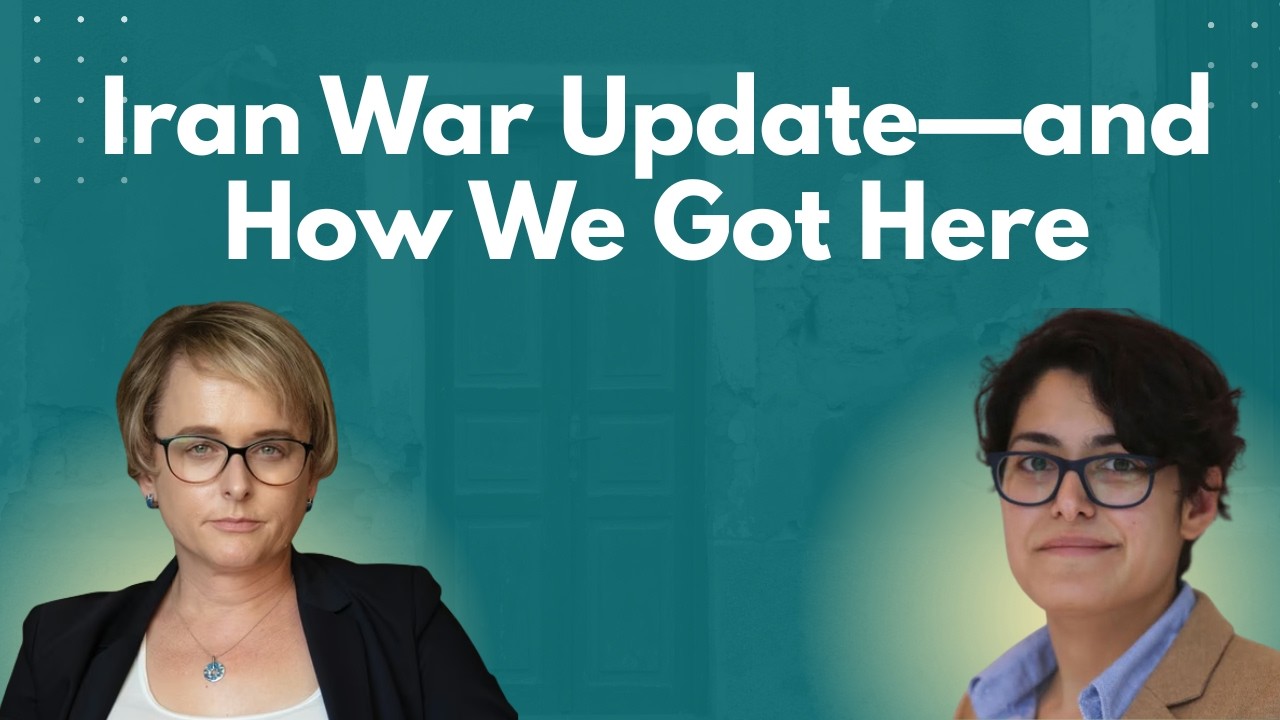
Lawfare Daily: Iran War Update—and How We Got Here
On today’s podcast, Executive Editor Natalie Orpett is joined by Ariane Tabatabai and Julia Curlee. Ari is Vice President of Research, Security and Defense at the Chicago Council on Global Affairs and a Contributing Editor at Lawfare, and Julia Curlee is a Public Service Fellow at Lawfare. They talk about the war in Iran: where things stand today, and how we got here—including how the gutting of the national security apparatus in Washington affected the way the war is being waged by Tehran. …
Lawfare Daily: The Houthi War Against Saudi Arabia
For today’s episode, Lawfare Foreign Policy Editor Daniel Byman interviews Gregory Johnsen, non-resident fellow at the Arab Gulf State Institute, to discuss the current war in Yemen. The two discuss the latest developments in the war, the reasons for the Houthis’ successes so far, the dilemmas facing Saudi Arabia, and why the situation has gone from bad to worse. To receive ad-free podcasts, become a Lawfare Material Supporter at www.patreon.com/lawfare. You can also support Lawfare by …
For today’s episode, Lawfare Foreign Policy Editor Daniel Byman interviews Gregory Johnsen, non-resident fellow at the Arab Gulf State Institute, to discuss the current war in Yemen.
The two discuss …the latest developments in the war, the reasons for the Houthis’ successes so far, the dilemmas facing Saudi Arabia, and why the situation has gone from bad to worse.
To receive ad-free podcasts, become a Lawfare Material Supporter at http://www.patreon.com/lawfare 🏛️. You can also support Lawfare by making a one-time donation at https://givebutter.com/lawfare-institute 🏛️.Show More
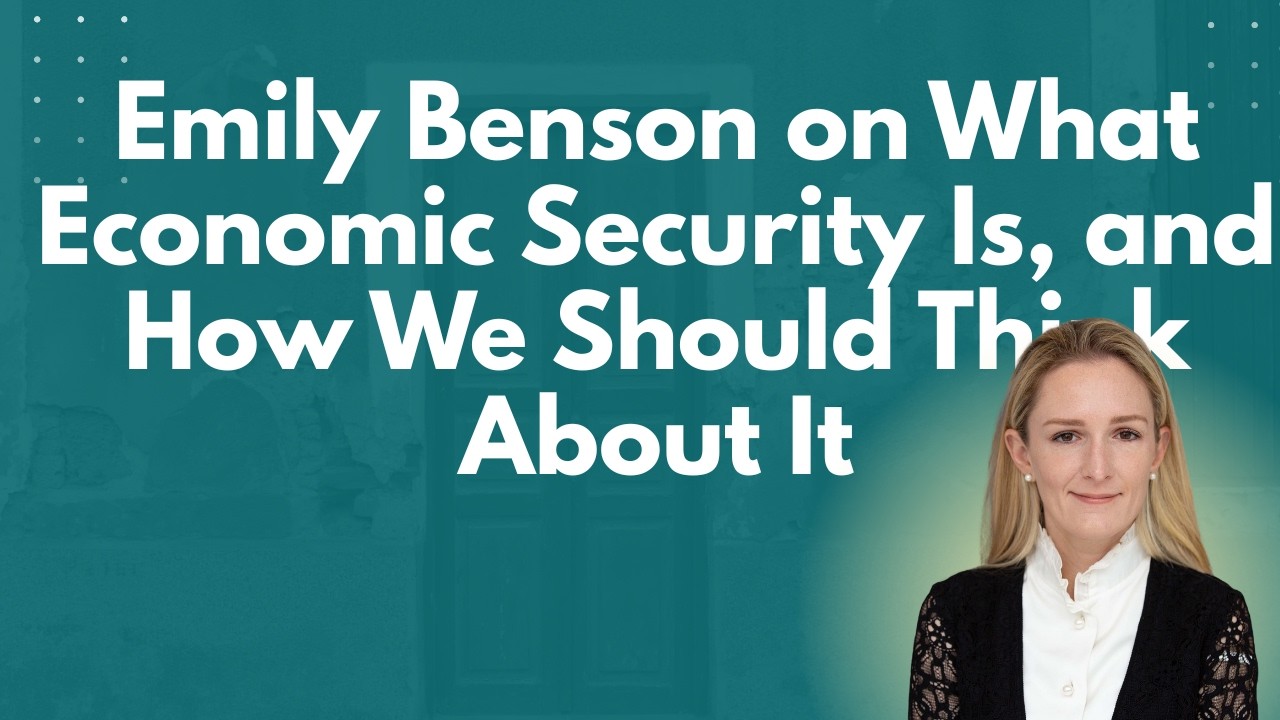
Lawfare Daily: Emily Benson on What Economic Security Is, and How We Should Think About It
Emily Benson is the Head of Strategy at Minerva Technology Futures, a strategic consulting firm that advises companies on how geopolitics impacts their business. She has also spent time at CSIS and at the Department of Commerce, and has spent more time thinking about economic statecraft than most of us. Emily joins Lawfare Contributing Editor and host of the Security Economics podcast Peter Harrell to discuss what economic security actually is and how we should think about it. She recently …
Emily Benson is the Head of Strategy at Minerva Technology Futures, a strategic consulting firm that advises companies on how geopolitics impacts their business. She has also spent time at …CSIS and at the Department of Commerce, and has spent more time thinking about economic statecraft than most of us.
Emily joins Lawfare Contributing Editor and host of the Security Economics podcast Peter Harrell to discuss what economic security actually is and how we should think about it. She recently moved to Europe, and that gives her an interesting perspective on the issue, including whether Europe needs to diversify away from U.S. technology because of U.S.-related economic security risks. They also discuss China and how the U.S. and China are wielding economic security tools against each other.
This episode is part of the Security Economics podcast series, in which Peter Harrell and guests explore the intersection of economics and national security, how countries manage their economies to support national security, and how they deploy economic tools in support of geopolitical objectives.
To receive ad-free podcasts, become a Lawfare Material Supporter at http://www.patreon.com/lawfare 🏛️. You can also support Lawfare by making a one-time donation at https://givebutter.com/lawfare-institute 🏛️.Show More
Lawfare Daily: Appeals Concerning Alien Enemies Act Removals in Apparent Defiance of a Court Order
Lee Gelernt, the chief ACLU litigator on Alien Enemies Act cases, speaks to Senior Editor Roger Parloff about two upcoming DC Circuit arguments he’ll be making relating to the March 15, 2025, removals of 137 Venezuelans under the Alien Enemies Act. In one, the en banc court will grapple with whether to permit Judge James Boasberg to conduct fact-finding on whether to seek contempt charges against high-level Trump administration officials, including current Attorney General Todd Blanche and …
Lee Gelernt, the chief ACLU litigator on Alien Enemies Act cases, speaks to Senior Editor Roger Parloff about two upcoming DC Circuit arguments he’ll be making relating to the March …15, 2025, removals of 137 Venezuelans under the Alien Enemies Act.
In one, the en banc court will grapple with whether to permit Judge James Boasberg to conduct fact-finding on whether to seek contempt charges against high-level Trump administration officials, including current Attorney General Todd Blanche and current U.S. Court of Appeals Judge Emil Bove.
To receive ad-free podcasts, become a Lawfare Material Supporter at http://www.patreon.com/lawfare 🏛️. You can also support Lawfare by making a one-time donation at https://givebutter.com/lawfare-institute 🏛️.Show More







Comments are closed.