Ladera Community Church, 3300 Alpine Rd., Portola Valley Sanctuary
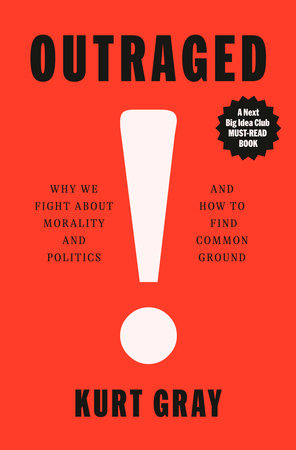
Explore the myths that fuel division and outrage, and how we can come together. Join a two‑part conversation on Outraged: Why We Fight About Morality and Politics and How to Find Common Ground, by social psychologist Kurt Gray, whose work examines how our perceptions of harm influence our reactions. Learn why we sometimes overreact to minor irritations or perceived threats, and why our country is so polarized.
How Nonviolent Revote Is Shaping the Twenty-first Century.
by Mark Engler and Paul Engler
Publisher: Bold Type Books
Recommended by: Bob B.
In a book that has become a modern classic of social movement organizing, Mark and Paul Engler explain that there is a craft to uprising—and that this craft can change the world.
From protests around climate change and immigrant rights, to #BlackLivesMatter and movements to defend democracy, a new generation is unleashing strategic nonviolent action to shape public debate and force political change. While mass movements are often portrayed as spontaneous and unpredictable, Mark and Paul Engler explore the hidden art behind such outbursts of protest, examining core principles that have been used to spark and guide moments of transformative unrest.
Now updated with new material discussing the major mobilizations of the past decade—including #MeToo, protests for racial and climate justice, and anti-Trump resistance—This Is an Uprising shows how new protest movements can be essential in fighting authoritarianism and advancing social and economic justice today.
The Mass Protest Decade and the Missing Revolution
by: Vincent Bevins
Publisher: PublicAffairs
Recommended by: Bob B. – Vincent Bevins presents “a more nuanced picture of the 3.5% rule, with data showing that mass protests don’t always lead to the change that protestors want.”
From 2010 to 2020, more people participated in protests than at any other point in human history. Yet we are not living in more just and democratic societies as a result. Acclaimed journalist Vincent Bevins carried out hundreds of interviews around the world, guided by a single, puzzling question: How did so many mass protests lead to the opposite of what they asked for?
The result is a stirring work of history that connects events in a dozen countries and reveals that conventional wisdom on revolutionary change is gravely misguided. From the so-called Arab Spring to Gezi Park in Turkey, from Ukraine’s Euromaidan to student rebellions in Chile and Hong Kong, Bevins provides a blow-by-blow account of street movements and their consequences, recounted in gripping detail. In this groundbreaking study of an extraordinary chain of events, protesters and major actors look back on successes and defeats, offering urgent lessons for the future.
Isaacson explores the origins of the second sentence of the Declaration of Independence: “We hold these truths to be self-evident, that all men are created equal, that they are endowed by their Creator with certain unalienable Rights, that among these are Life, Liberty, and the pursuit of Happiness.” • He breaks down the historical context, showing how Jefferson drafted it and Franklin and Adams edited it. • The book highlights how those words shaped the American Dream and remain relevant in today’s polarized times.
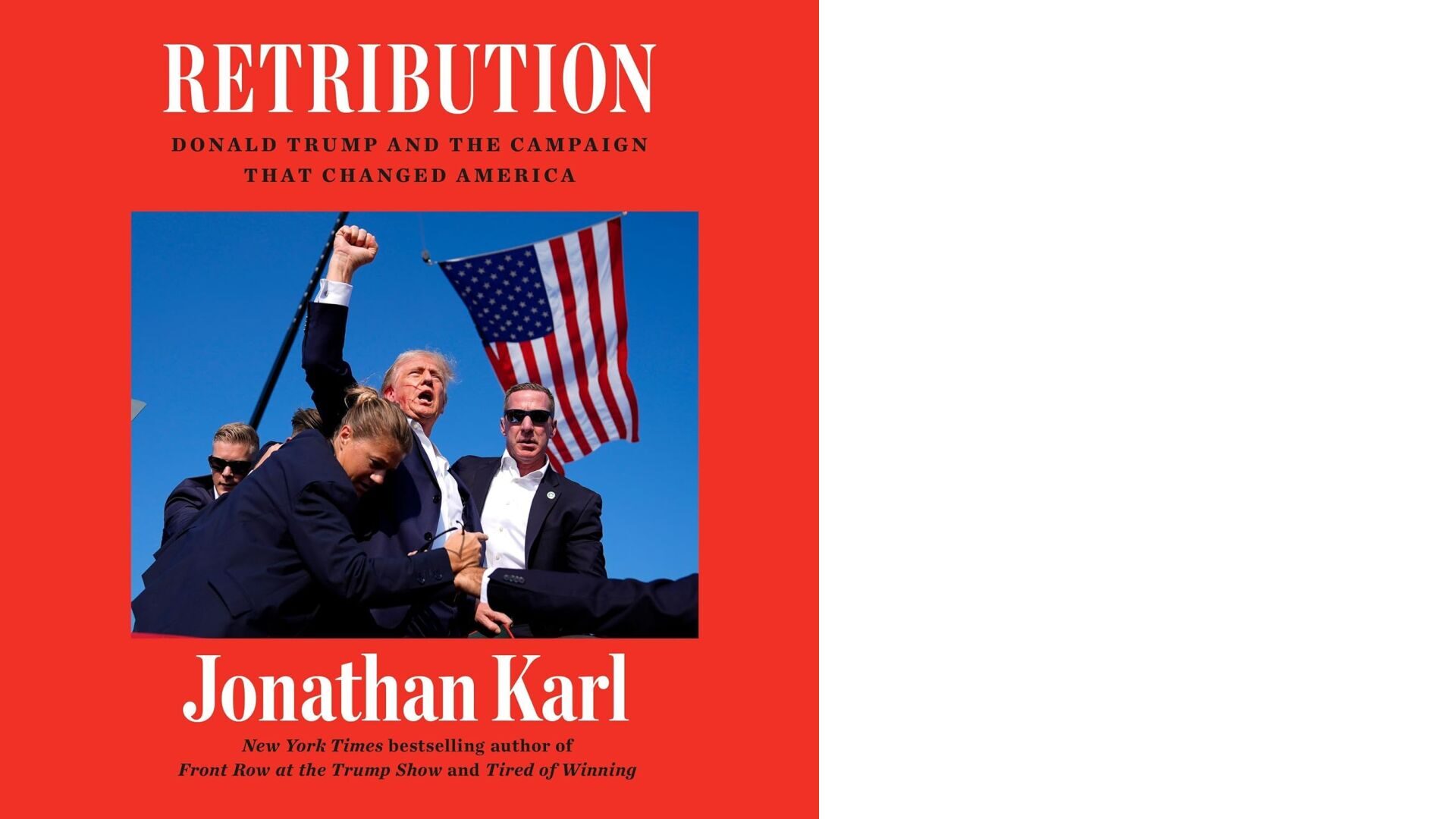
Donald Trump and the Campaign that Changed America
by Jonathan Karl
Publisher: Dutton
Recommended by: Steve Gadol
The must-read new book from Jonathan Karl, the author of New York Times bestsellers Tired of Winning, Betrayal, and Front Row at the Trump Show
In Retribution, Jonathan Karl’s unparalleled access brings us behind closed doors deep inside the White House and presidential campaigns, revealing the extraordinary moments that ended one man’s presidency and brought another back to power.
This is a story of unprecedented political plot twists, showing what happened behind the scenes as political fortunes fell and rose again, and as a new team coalesced around President Trump with the goal of creating an entirely new world order. From President Biden’s shocking withdrawal and Vice President Harris’s historic run, to the multiple assassination attempts on President Trump, his election, and the changes he has brought to every corner of the country, this book reveals in surprising new detail how we got here, and what we can expect from American politics in the years to come.
China, Russia, America and the New Global Disorder
by Michael McFaul
Publisher: Mariner Books
“A history, an analysis, and a set of prescriptions for the greatest geopolitical challenge of our time: the threat to the democratic world posed by China and Russia.” —Anne Applebaum, author of Autocracy, Inc.
“A monumental account of contemporary geopolitics”—Francis Fukuyama, author of Liberalism and Its Discontents From New York Times bestselling author and former ambassador to Russia Michael McFaul comes a bold, clear-eyed look at how the autocracies of China and Russia are challenging the current global order, and how America’s future depends on successfully confronting this threat.
Making Sense of Politics in a World of Increasing Misinformation and Manipulation
by Lorenzo Burton
Tired of the endless division, misinformation, and manipulation in today’s political climate?
Beyond Left & Right cuts through the noise to reveal how political systems truly function—and how to recognize when we’re being misled by those in power. In a world where confusion and bias are often used as tools of control, it helps you think more clearly, question more deeply, and see through the fog to understand what’s really going on.
A User's Manual for Every American: 2nd Edition: The Trump Era
by David Pepper
Publisher: St. Helena Press
Recommended by: Steve G.
Saving Democracy is that rare book that doesn’t simply diagnose the crisis our democracy faces, and the broader strategies that we must take to fight back…but it breaks it all down so that every reader understands the role she or he can play in their own lives.
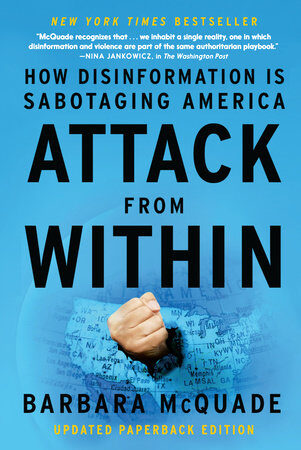
UPDATED EDITION: The MSNBC legal analyst explores the impact of disinformation after the 2024 presidential election—and what Americans can do before it’s too late.
“A comprehensive guide to the dynamics of disinformation and a necessary call to theethical commitment to truth that all democracies require.” —Timothy Snyder, author of On Tyranny
Disinformation—the deliberate spreading of lies disguised as truth, whether from opportunists on the far right, misinformed media influencers, or others—is fragmenting America more than ever before, pushing the nation toward extreme views, civil unrest, and violence.
In this bestselling book, now with a new foreword by the author, Barbara McQuade identifies how disinformation is seeping into all facets of our society, causing havoc in our voting systems, schools, hospitals, workplaces, and the Capitol.
McQuade, an MSNBC legal analyst and former federal prosecutor confronts the ways disinformation is being weaponized to polarize voters, degrade our legal structures, and leverage the political influence of manipulators and authoritarians. Now newly updated, Attack from Within shows us how to fight back against misinformed, extremist thinking and work toward preserving America’s hard-won democracy.
In White Rural Rage, Tom Schaller and Paul Waldman explore why rural Whites have failed to reap the benefits from their outsize political power and why, as a result, they are the most likely group to abandon democratic norms and traditions. Their rage—stoked daily by Republican politicians and the conservative media—now poses an existential threat to the United States.
INTERVIEW: Tom Schaller and Paul Waldman talk to Matt Lewis Media
A New Vision for Building the Beloved Community By Adam Russell Taylor Recommended by: Bob Publisher: Broadleaf Books
Thinking about alternatives is an important part of the One Million Rising training. In the words of the president of Sojourners, Adam Russell Taylor, whom I heard speak recently, to build a “more perfect union,” we need to be focusing on three priorities: Blocking, Bridging, and Building. We are focused a lot on Blocking bad things happening, but have little power to do that. In the future, we can work on Bridging, but that will take a very long time and will entail millions of one-on-one relationships.
Why We Fight About Morality and Politics and How to Find Common Ground
By Kurt Gray
Publisher: Pantheon
It’s easy to assume that liberals and conservatives have radically different moral foundations. In Outraged, Kurt Gray showcases the latest science to demonstrate that we all have the same moral mind—that everyone’s moral judgments stem from feeling threatened or vulnerable to harm.
We all care about protecting ourselves and the vulnerable. Conflict arises, however, when we have different perceptions of harm. We get outraged when we disagree about who the “real” victim is, whether we’re talking about political issues, fights with our in-laws, or arguments on the playground.
In this fascinating and insightful tour of our moral minds, Gray tackles popular myths that prevent us from understanding ourselves and those around us. While it is commonly believed that our ancestors were apex predators, Gray argues that for the majority of our evolutionary history, humans were more hunted than hunter. This explains why our minds are hard-wired to perceive threats, and provides surprising insights on the scientific origins of our values and beliefs. Though we might think ourselves driven by objective reasoning, Gray unveils new research that finds our moral judgments are based on gut feelings rather than rational thought, and presents a compelling reminder that we are more alike than we might think.
Drawing on groundbreaking research, Gray provides a captivating new explanation for our moral outrage, and unpacks how to best bridge divides. If you want to understand the morals of the “other side,” ask yourself a simple question—what harms do they see?
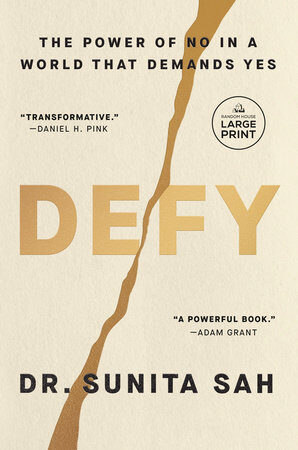
Imagine living the life you want to lead, not the one you’re willing to accept. This profound but practical book offers clear steps to stop people pleasing and start living your truth.
“A powerful book. If you’ve ever compromised your principles to please others, Defy will give you the will—and skill—to stand up for yourself.”—Adam Grant, #1 New York Times bestselling author of Think Again
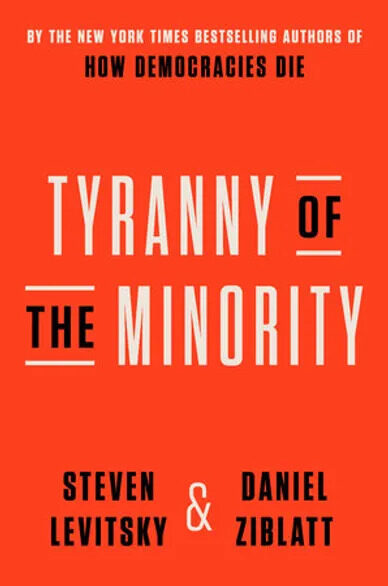
Harvard professors Steven Levitsky and Daniel Ziblatt offer a coherent framework for understanding these volatile times. They draw on a wealth of examples—from 1930s France to present-day Thailand—to explain why and how political parties turn against democracy. They then show how our Constitution makes us uniquely vulnerable to attacks from within: It is a pernicious enabler of minority rule, allowing partisan minorities to consistently thwart and even rule over popular majorities. Most modern democracies—from Germany and Sweden to Argentina and New Zealand—have eliminated outdated institutions like elite upper chambers, indirect elections, and lifetime tenure for judges. The United States lags dangerously behind.
INTERVIEW: Levitsky and Ziblatt with journalist Tiziana Dearing at Harvard
Elections are decided on front porches and phone calls across the country, one voter at a time. The Joy of Talking Politics with Strangers is a comprehensive guidebook that helps volunteers connect one-on-one with voters – our most powerful tool for winning elections. These conversations can also spark unexpected moments of empathy and even kinship with our fellow Americans.
After 2016, volunteer Elizabeth Chur realized it’s up to ordinary citizens to protect our democracy. She started learning Spanish, began phone banking, and canvassed in California’s Central Valley, home to some of the nation’s most contested swing districts. By talking with over 1,000 people, she discovered how to forge meaningful connections with the hardest-to-reach voters, including:
Young people
Latinos
People who say, “I don’t vote.”
Filled with uplifting stories and practical tips, this inspiring book helps you earn people’s trust – and their votes. It demonstrates how taking positive action builds community and creates hope. Whether you’re a first-time volunteer or seasoned activist, The Joy of Talking Politics with Strangers shows you how to engage more effectively with voters and win elections.
The Art of Seeing Others Deeply and Being Deeply Seen
by David Brooks
Summary
Recommended by Bob
Driven by his trademark sense of curiosity and his determination to grow as a person, David Brooks draws from the fields of psychology and neuroscience and from the worlds of theater, philosophy, history, and education to present a welcoming, hopeful, integrated approach to human connection. How to Know a Person helps readers become more understanding and considerate toward others, and to find the joy that comes from being seen. Along the way it offers a possible remedy for a society that is riven by fragmentation, hostility, and misperception.
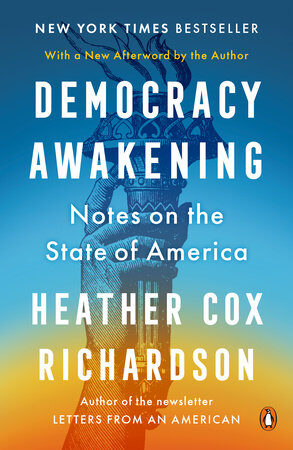
At a time when the very foundations of American democracy seem under threat, the lessons of the past offer a road map for navigating a moment of political crisis. In Democracy Awakening, acclaimed historian Heather Cox Richardson delves into the tumultuous journey of American democracy, tracing the roots of Donald Trump’s “authoritarian experiment” to the earliest days of the republic. She examines the historical forces that have led to the current political climate, showing how modern conservatism has preyed upon a disaffected population, weaponizing language and promoting false history to consolidate power.
With remarkable clarity and the same accessible voice that brings millions to her newsletter, Letters from an American, Richardson wrangles a chaotic news feed into a story that pivots effortlessly from the Founders to the abolitionists to Nixon to the January 6 insurrection. An essential read for anyone concerned about the state of America, Democracy Awakening is more than a history book; it’s a call to action. Richardson reminds us that democracy requires constant vigilance and participation from all of us, showing how we, as a nation, can take the lessons of the past to secure a more just and equitable future.
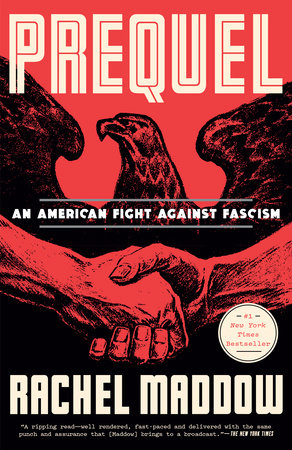
Inspired by her research for the hit podcast Ultra, Rachel Maddow charts the rise of a wild American strain of authoritarianism that has been alive on the far-right edge of our politics for the better part of a century. Before and even after our troops had begun fighting abroad in World War II, a clandestine network flooded the country with disinformation aimed at sapping the strength of the U.S. war effort and persuading Americans that our natural alliance was with the Axis, not against it. It was a sophisticated and shockingly well-funded campaign to undermine democratic institutions, promote antisemitism, and destroy citizens’ confidence in their elected leaders, with the ultimate goal of overthrowing the U.S. government and installing authoritarian rule.
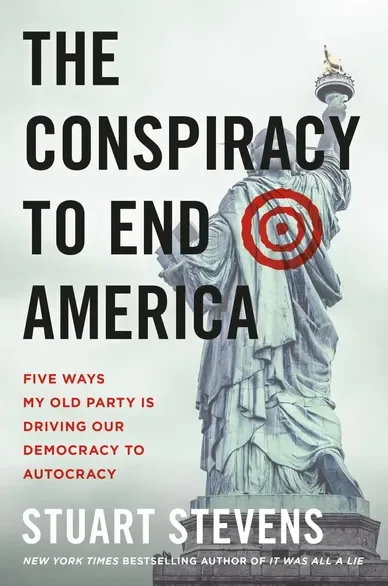
Five Ways My Old Party Is Driving Our Democracy to Autocracy
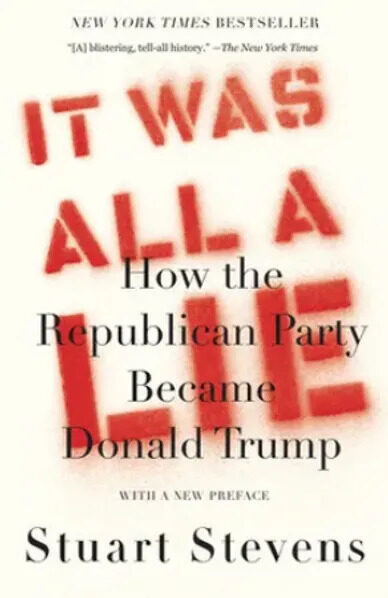
by Stuart Stevens
Publisher: Hachette Book Group
Former chief Republican strategist, Lincoln Project adviser, and bestselling author ofIt Was All a Lie, Stuart Stevens offers an ominous warning that the GOP is dragging our country toward autocracy—and if we don’t wake up to the crisis in our system, 2024 may well be our last free and fair election.
INTERVIEW: Stuart Stevens talks to Brian Watt (KQED) at the Commonwealth Club
The Divider brings us into the Oval Office for countless scenes both tense and comical, revealing how close we got to nuclear war with North Korea, which cabinet members had a resignation pact, whether Trump asked Japan’s prime minister to nominate him for a Nobel Prize and much more. The book also explores the moral choices confronting those around Trump—how they justified working for a man they considered unfit for office, and where they drew their lines.
Woodward and Costa interviewed more than 200 people at the center of the turmoil, resulting in more than 6,000 pages of transcripts—and a spellbinding and definitive portrait of a nation on the brink. This classic study of Washington takes readers deep inside the Trump White House, the Biden White House, the 2020 campaign, and the Pentagon and Congress, with vivid, eyewitness accounts of what really happened.
Why the Modern Male Is Struggling, Why It Matters, and What to Do about It
by Richard V. Reeves
Publisher: Brookings Institution Press
Recommended by: Bob B.
“The problem with men is typically framed as a problem of men,” writes Reeves. “It is men who must be fixed, one man or boy at a time. This individualist approach is wrong.” Instead, he maintains there are structural problems, societal issues, that need to be addressed if men are not to become ever more lost, defeated and angry.
Donald Trump’s Washington and the Price of Submission By Mark Leibovich Publisher: Penguin Press
Recommended by Cindi
“This is a really funny book.” Kara Swisher.
Mark Leibovich’s unflinching account of the moral rout of a major American political party, tracking the transformation of Rubio, Cruz, Graham, and their ilk into the administration’s chief enablers, and the swamp’s lesser lights into frantic chasers of the grift…isn’t another view from the Oval Office: it’s the view from the Trump Hotel.
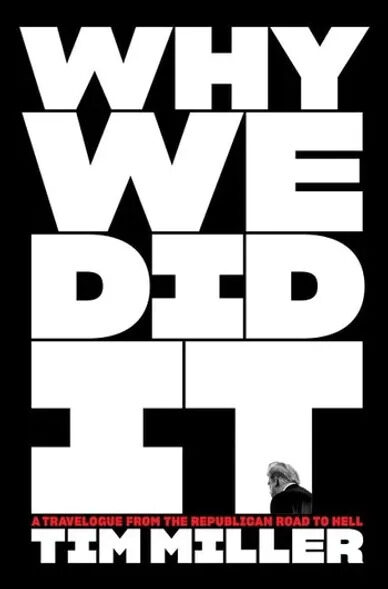
In a bracingly honest reflection on both his own past work for the Republican Party and the contortions of his former peers in the GOP establishment, Tim Miller draws a straight line between the actions of the 2000s GOP to the Republican political class’s Trumpian takeover, including the horrors of January 6th.
From ruminations on the mental jujitsu that allowed him as a gay man to justify becoming a hitman for homophobes, to astonishingly raw interviews with former colleagues who jumped on the Trump Train, Miller diagrams the flattering and delusional stories GOP operatives tell themselves so they can sleep at night. With a humorous touch he reveals Reince Priebus’ neediness, Sean Spicer’s desperation, Elise Stefanik and Chris Christie’s raw ambition, and his close friends’ submission to a MAGA psychosis.
Why We Did It is a vital, darkly satirical warning that all the narcissistic justifications that got us to this place still thrive within the Republican party, which means they will continue to make the same mistakes and political calculations that got us here, with disastrous consequences for the nation
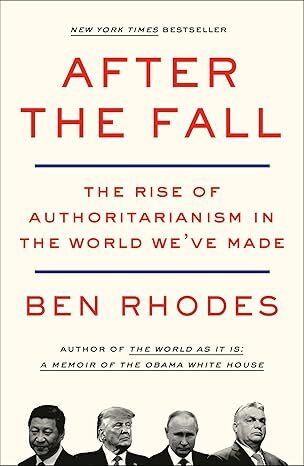
The rise of Authoritarianism in the world we've made
by Bden Rhodes
Publisher: Random House
At a time when democracy in the United States is endangered as never before, Ben Rhodes spent years traveling the world to understand why. He visited dozens of countries, meeting with politicians and activists confronting the same nationalism and authoritarianism that are tearing America apart. Along the way, he discusses the growing authoritarianism of Vladimir Putin, and his aggression towards Ukraine, with the foremost opposition leader in Russia, who was subsequently poisoned and imprisoned; he profiled Hong Kong protesters who saw their movement snuffed out by China under Xi Jinping; and America itself reached the precipice of losing democracy before giving itself a fragile second chance.
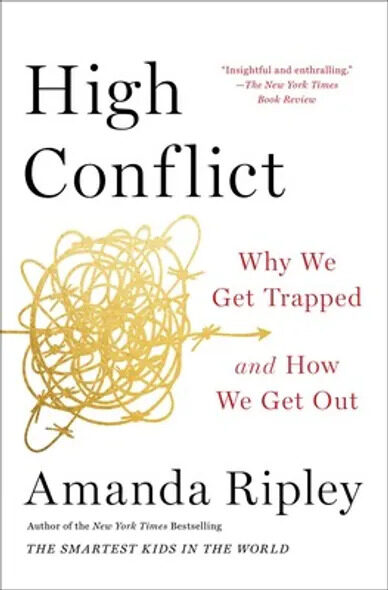
When we are baffled by the insanity of the “other side”—in our politics, at work, or at home—it’s because we aren’t seeing how the conflict itself has taken over. That’s what “high conflict” does. It’s the invisible hand of our time. And it’s different from the useful friction of “healthy conflict”. That’s good conflict, and it’s a necessary force that pushes us to be better people.
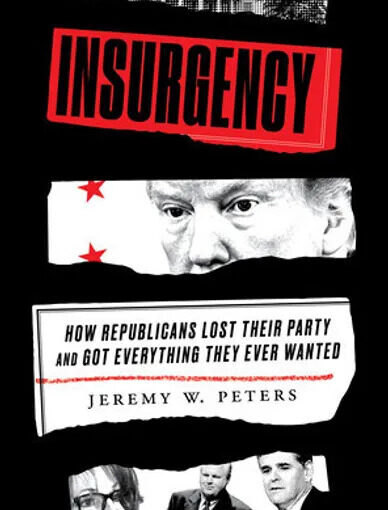
How Republicans Lost Their Party and Got Everything They Ever Wanted
by Jeremy W. Peters
Publisher: Random House Publishing House
NYTimes reporter, Jeremy W. Peters’ epic narrative chronicles the fracturing of the Republican Party. Insurgency is a fantasia-like story of a party establishment that believed it could control the dark energy it helped foment—right up until it suddenly couldn’t. How, Peters asks, did conservative values that Republicans claimed to cherish, like small government, fiscal responsibility, and morality get completely eroded?
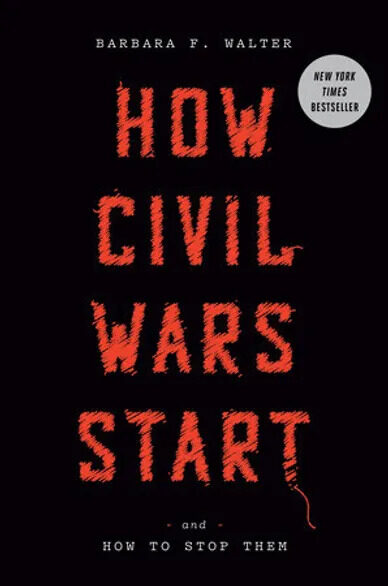
Barbara F. Walter, a political science professor at U.C. San Diego, has spent over three decades studying civil conflict. Over the last two decades, the number of active civil wars around the world has almost doubled. Walter reveals the warning signs—where wars tend to start, who initiates them, what triggers them—and why some countries tip over into conflict while others remain stable. Drawing on the latest international research and lessons from over twenty countries, Walter identifies the crucial risk factors, from democratic backsliding to factionalization and the politics of resentment. A civil war today won’t look like America in the 1860s, Russia in the 1920s, or Spain in the 1930s. It will begin with sporadic acts of violence and terror, accelerated by social media. It will sneak up on us and leave us wondering how we could have been so blind.
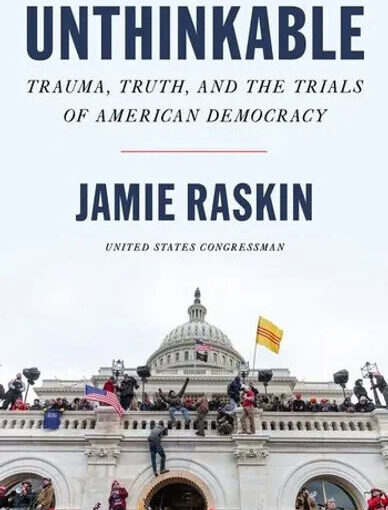
Trauma, Truth and the Trials of American Democracy
by James Raskin
Publisher: Harper
In this searing memoir, Congressman Jamie Raskin tells the story of the forty-five days at the start of 2021 that permanently changed his life—and his family’s—as he confronted the painful loss of his son to suicide, lived through the violent insurrection in our nation’s Capital, and led the impeachment effort to hold President Trump accountable for inciting the political violence.
Jamie Raskin in conversation at The National Arts Club
This is the explosive look at the aftermath of the 2020 election–and the January 6th uprising–from ABC News’ chief Washington correspondent, Jonathan Karl. Jonathan Karl, the reporter who has known Donald Trump longer than any other White House correspondent, Karl told the story of Trump’s rise in the New York Times bestseller Front Row at the Trump Show. Now he tells the story of Trump’s downfall, complete with riveting behind-the-scenes accounts of some of the darkest days in the history of the American presidency and packed with original reporting and on-the-record interviews with central figures in this drama who are telling their stories for the first time.
Does power corrupt, or are corrupt people drawn to power? Are tyrants made or born? Are entrepreneurs who embezzle and cops who kill the result of poorly designed systems or are they just bad people? If you were suddenly thrust into a position of power, would you be able to resist the temptation to line your pockets or seek revenge against your enemies?
To answer these questions, Corruptible draws on over 500 interviews with some of the world’s top leaders—from the noblest to the dirtiest—including presidents and philanthropists as well as rebels, cultists, and dictators. Some of the fascinating insights include: how facial appearance determines who we pick as leaders, why narcissists make more money, why some people don’t want power at all and others are drawn to it out of a psychopathic impulse, and why being the “beta” (second in command) may actually be the optimal place for health and well-being.
Corruptible also features a wealth of counterintuitive examples from history and social science: you’ll meet the worst bioterrorist in American history, hit the slopes with a ski instructor who once ruled Iraq, and learn why the inability of chimpanzees to play baseball is central to the development of human hierarchies.
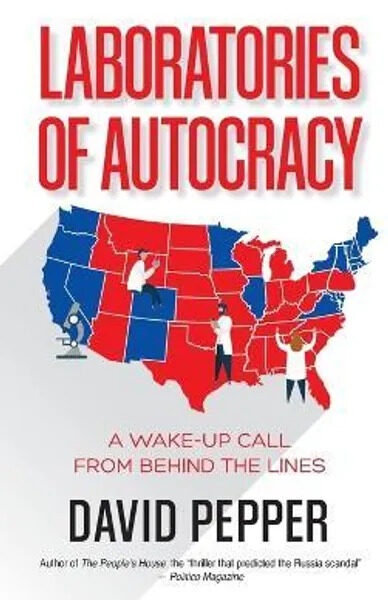
David Pepper shows that far more than the high-profile antics of national politicians and Trump himself, it’s anonymous, often corrupt politicians in statehouses across the country who pose the greatest dangers to American democracy. Amid all the chaos, these statehouses are hard at work, every day, hacking away at core principles and protections of our democratic system. And they’re getting more audacious every year.
Because these statehouses no longer operate as functioning democracies, these unknown politicians have all the incentive to keep doing greater damage, and can not be held accountable however extreme they get. This has driven steep declines in states like Ohio and others across the country. And collectively, it’s placed American democracy in its greatest peril since the dawn of the Jim Crow era.
But Pepper doesn’t stop there. He lays out a robust pro-democracy agenda outlining how everyone from elected officials to business leaders to everyday citizens can fight back.
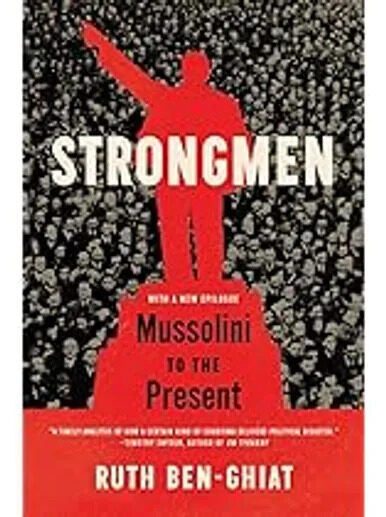
Ruth Ben-Ghiat is the expert on the “strongman” playbook employed by authoritarian demagogues from Mussolini to Putin—enabling her to predict with uncanny accuracy the recent experience in America and Europe. In Strongmen, she lays bare the blueprint these leaders have followed over the past 100 years, and empowers us to recognize, resist, and prevent their disastrous rule in the future.
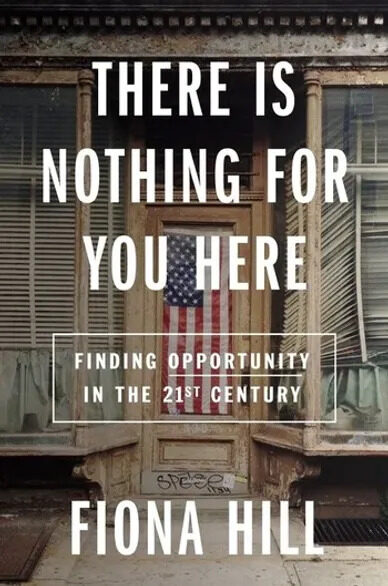
A celebrated foreign-policy expert and key impeachment witness reveals how declining opportunity has set America on the grim path of modern Russia – and draws on her personal journey out of poverty, and her unique perspectives as a historian and policy maker, to show how we can return hope to our forgotten places.
Fiona Hill grew up in a world of terminal decay. The last of the local mines had closed, businesses were shuttering, and despair was etched in the faces around her. Her father urged her to get out of their blighted corner of northern England: “There is nothing for you here, pet,” he said.
The coal-miner’s daughter managed to go further than he ever could have dreamed. She studied in Moscow and at Harvard, became an American citizen, and served three U.S. Presidents. But in the heartlands of both Russia and the United States, she saw troubling reflections of her hometown and similar populist impulses. By the time she offered her brave testimony in the first impeachment inquiry of President Trump, Hill knew that the desperation of forgotten people was driving American politics over the brink—and that we were running out of time to save ourselves from Russia’s fate. In this powerful, deeply personal account, she shares what she has learned, and shows why expanding opportunity is the only long-term hope for our democracy.
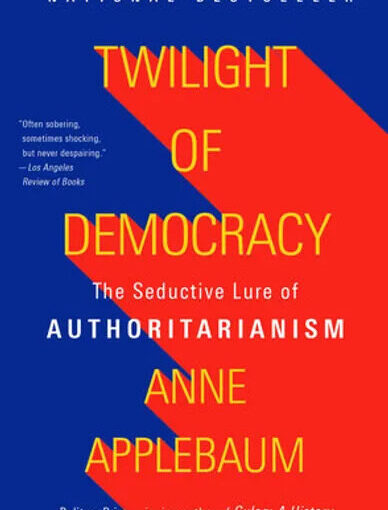
Despotic leaders do not rule alone; they rely on political allies, bureaucrats, and media figures to pave their way and support their rule. The authoritarian and nationalist parties that have arisen within modern democracies offer new paths to wealth or power for their adherents.
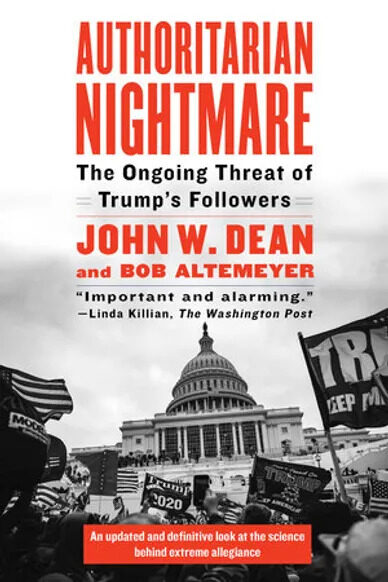
The Ongoing Threat of Trump's Followers / Trump and His Followers
by John W. Dean
and Bob Altemeyer
Publisher: Melville House
John Dean, of Watergate fame, joined with Bob Altemeter, an expert on authoritarianism, to look at the entirety of the Trump phenomenon, using psychological and social science studies, as well as polling analyses, to understand Donald Trump’s followers. How did America end up with a leader who acts so crudely and despotically, and counter to our democratic principles? Why do his followers stick with him, even when he acts against their interests?
Using Convergent Facilitation to Reach Breakthrough Collaborative Decisions
by Miki Kashtan
Miki introduces a novel decision-making process called Convergent Facilitation that builds trust from the beginning, surfaces concerns and addresses them, and turns conflicts into creative dilemmas that groups feel energized to solve together. This highly effective process has been used successfully around the world to resolve problems and teach people how to collaborate without sacrificing productivity.
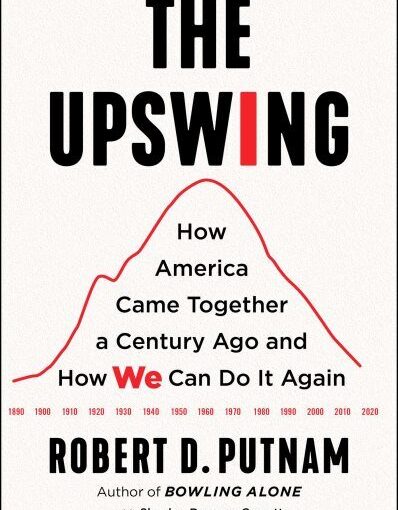
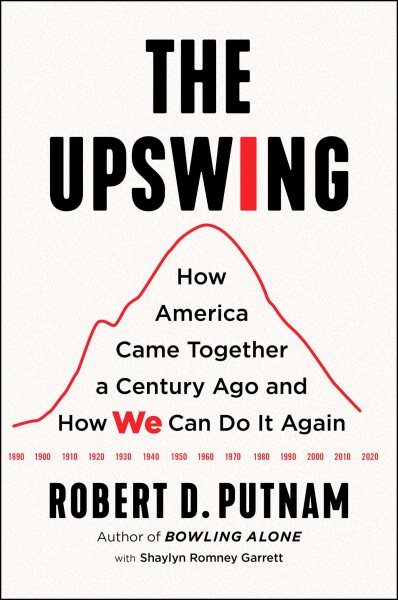
how America came together a century ago and how we can do it again
by Robert D. Putnam
and Shaylyn Romney Garrett.
Publisher: Simon & Schuster
“An eminent political scientist’s brilliant synthesis of social and political trends over the past century that shows how we have gone from an individualistic society to a more communitarian society and then back again — and how we can use that experience to overcome once again the individualism that currently weakens our country”
We can’t go back to when things were “good.” But we can learn from when things ware “bad.” In the early 1900’s the Guilded Age of the robber barons, things were really bad for most US citizens; they feared for the end of democracy and the take-over by the oligarchs.
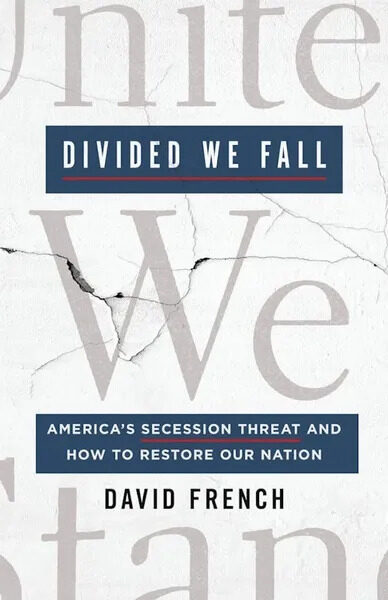
America’s Secession Threat and How to Restore Our Nation
by David French
Summary
Reestablishing national unity will require the bravery to commit ourselves to embracing qualities of kindness, decency, and grace towards those we disagree with ideologically. David French calls on all of us to demonstrate true tolerance so we can heal the American divide. If we want to remain united, we must learn to stand together again.
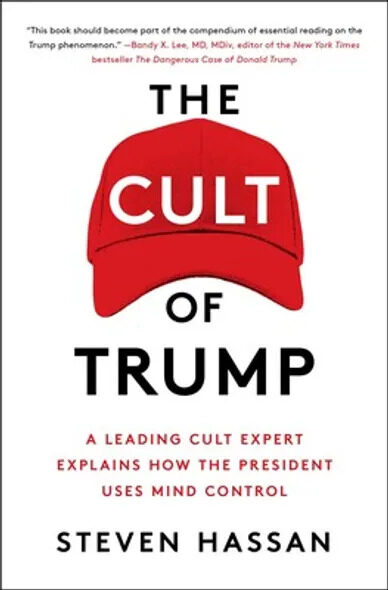
A Leading Cult Expert Explains How the President Uses Mind Control
by Steve Hassan
Publisher: Free Press
Mind control and licensed mental health expert Steven Hassan draws parallels between our 45th president and people like Jim Jones, David Koresh, Ron Hubbard, and Sun Myung Moon, arguing that this presidency is in many ways like a destructive cult. He specifically details the ways in which people are influenced through an array of social psychology methods and how they become fiercely loyal and obedient.
Dr. Steven Hassan’s presentation to Commonwealth Club of CA
Written by Republican political consultant Stuart Stevens, this is a tell-all book about how the party he’s stood with for years spiraled out of control and lost the moral and political standpoints that once made it great. Unlike other books about Donald Trump, Stevens presents the 45th president of the United States as the inevitable result of the Republican Party’s failings, not its instigator.
Stuart Stevens spent decades electing Republicans at every level, from presidents to senators to local officials. He knows the GOP as intimately as anyone in America, and in this new book he offers a devastating portrait of a party that has lost its moral and political compass.
This is not a book about how Donald J. Trump hijacked the Republican Party and changed it into something else. Stevens shows how Trump is in fact the natural outcome of five decades of hypocrisy and self-delusion, dating all the way back to the civil rights legislation of the early 1960s. Stevens shows how racism has always lurked in the modern GOP’s DNA, from Goldwater’s opposition to desegregation to Ronald Reagan’s welfare queens and states’ rights rhetoric. He gives an insider’s account of the rank hypocrisy of the party’s claims to embody “family values,” and shows how the party’s vaunted commitment to fiscal responsibility has been a charade since the 1980s. When a party stands for nothing, he argues, it is only natural that it will be taken over by the loudest and angriest voices in the room.
It Was All a Lie is not just an indictment of the Republican Party, but a candid and often lacerating mea culpa. Stevens is not asking for pity or forgiveness; he is simply telling us what he has seen firsthand. He helped to create the modern party that kneels before a morally bankrupt con man and now he wants nothing more than to see what it has become burned to the ground.
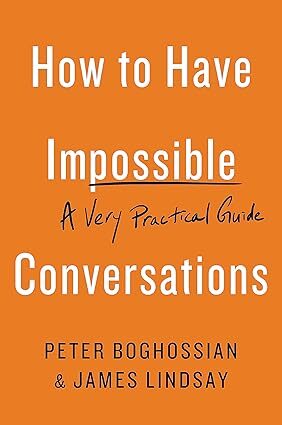
From politics and religion to workplace negotiations, ace the high-stakes conversations in your life with this indispensable guide from a persuasion expert.
In our current political climate, it seems impossible to have a reasonable conversation with anyone who has a different opinion. Whether you’re online, in a classroom, an office, a town hall—or just hoping to get through a family dinner with a stubborn relative—dialogue shuts down when perspectives clash. Heated debates often lead to insults and shaming, blocking any possibility of productive discourse. Everyone seems to be on a hair trigger.
In How to Have Impossible Conversations, Peter Boghossian and James Lindsay guide you through the straightforward, practical, conversational techniques necessary for every successful conversation—whether the issue is climate change, religious faith, gender identity, race, poverty, immigration, or gun control. Boghossian and Lindsay teach the subtle art of instilling doubts and opening minds. They cover everything from learning the fundamentals for good conversations to achieving expert-level techniques to deal with hardliners and extremists. This book is the manual everyone needs to foster a climate of civility, connection, and empathy.
“This is a self-help book on how to argue effectively, conciliate, and gently persuade. The authors admit to getting it wrong in their own past conversations. One by one, I recognize the same mistakes in me. The world would be a better place if everyone read this book.” —Richard Dawkins, author of Science in the Soul and Outgrowing God
Shoot the Messenger – Delivering “messages” doesn’t work, have a “conversation,” an exchange instead
Intentions – People have better intentions than you may think
Walk Away – Don’t push your conversational partner beyond their conflict zone
Beginner Level: Nine Ways to Start Changing Minds
Modeling – Model the behavior you want to see in others
Words – Define terms up front
Ask Questions – Focus on a specific question with genuine curiosity; avoid generalities, broad conclusions
Acknowledge Extremists – Point out and acknowledge unhelpful things people on your side have done
Navigating Social Media – Do not vent on social media
Don’t Blame, Do Discuss Contributions – Shift from “blaming” terms to “contribution” language, acknowledging things that got us to this unhappy place and emphasizing how to move forward
Focus on Epistemology – Figure out how people “know” what they claim to know, what’s the evidence
Learn – Learn what makes someone close-minded, what personal experiences have led them to a position
What NOT to Do (Reverse Applications) – A list of fundamental and basic conversational mistakes
Intermediate Level: Seven Ways to Improve Your Interventions
Let Friends Be Wrong – It’s okay if someone disagrees with you, even about a cherished conclusion
Build Golden Bridges – Find ways for your conversation partner to avoid social embarrassment if they change their mind
Language – Avoid “you,” switch to third person or collaborative language like “we” and “us”
Stuck? Reframe – Shift the conversation to keep it going smoothly or to get it back on track, use metaphors
Change Your Mind – Change your mind on the spot or be willing to reconsider
Introduce Scales – Use scales to gauge effective interventions, figure out how confident someone is in a belief, seeking places where they might be willing to reconsider, and put issues into perspective
Outsourcing – Turn to outside information to answer the question, “How do you know that?”
Five Advanced Skills for Contentious Conversations
Keep Rapoport’s Rules – Re-express, list points of agreement, mention what you learned, only then rebut
Avoid Facts – Bringing facts into a conversation requires considering timing and what counts as evidence
Seek Disconfirmation – How could that belief be incorrect?
Yes, and … — Eliminate the word “but” from your spoken vocabulary; affirm first, then add
Dealing with Anger – Know thyself; don’t escalate, monitor your emotions and take a pause if necessary
Six Expert Skills to Engage the Close-Minded
Synthesis – Recruit your partner to help refine and synthesize your positions
Help Vent Steam – Talk through emotional roadblocks
Altercasting – Cast your partner in a role that helps her think and behave differently
Hostage Negotiations – Use research-based ideas from hostage negotiations: mini-encouragers, mirroring, etc
Probe the Limits – Engage someone who professes a belief that can’t be lived, unmask disingenuous stmts.
Counter-Intervention Strategies – If someone is trying to intervene in your cognitive processes, go with it…
Master Level: Two Keys to Conversing
How to Converse with an Ideologue – Switch to moral epistemology, talk about values
Moral Reframing – Learn to speak moral dialects, study Jonathan Haidt’s moral foundations
Timothy Snyder provides a stark warning for the future of American democracy. Too easily we are ignoring the ways in which tyranny starts to eat away at democracy. As our political system faces new threats – not unlike those faced by democracies in the 20th century – we must look to the past to safeguard our future.
INTERVIEW: Listen to Professor Snyder discuss his book at Politics and Prose Bookstore
Why Good People Are Divided by Politics and Religion
by Jonathan Haidt
Drawing on his twenty-five years of groundbreaking research on moral psychology, Jonathan Haidt shows how moral judgments arise not from reason but from gut feelings. He shows why liberals, conservatives, and libertarians have such different intuitions about right and wrong, and he shows why each side is actually right about many of its central concerns.
If you are not interested in reading the book, he has a TED talk that covers his main points. See:
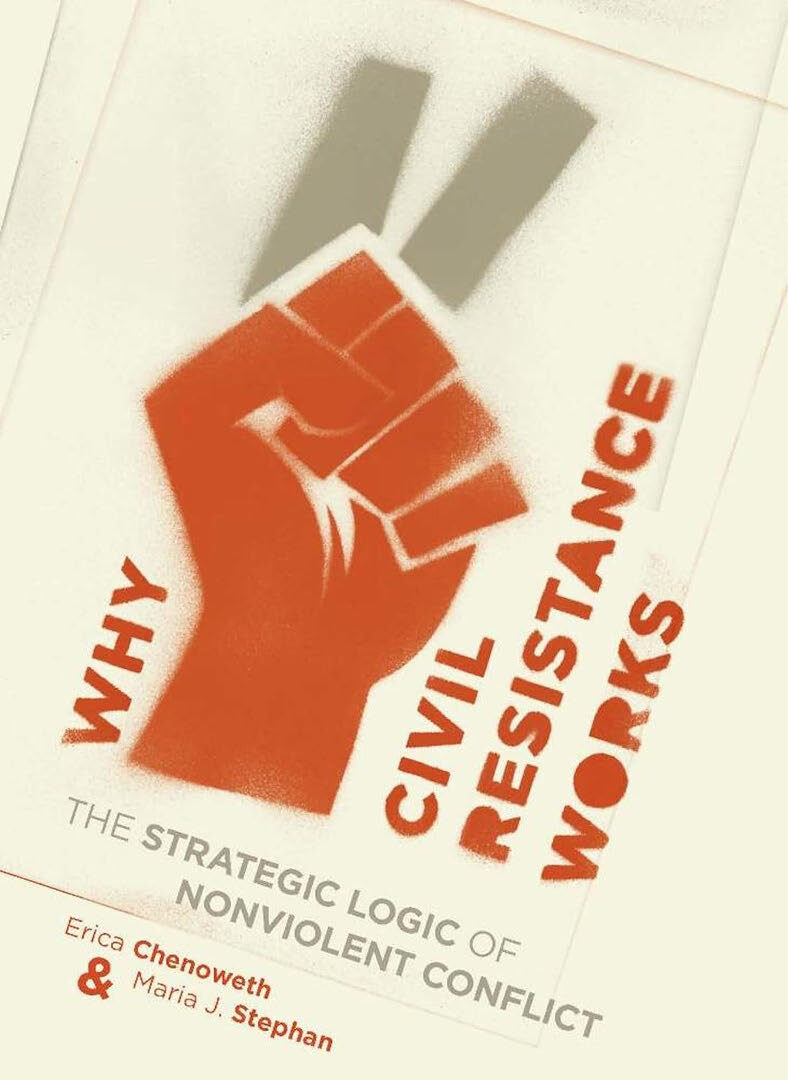
For more than a century, from 1900 to 2006, campaigns of nonviolent resistance were more than twice as effective as their violent counterparts in achieving their stated goals. By attracting impressive support from citizens, whose activism takes the form of protests, boycotts, civil disobedience, and other forms of nonviolent noncooperation, these efforts help separate regimes from their main sources of power and produce remarkable results, even in Iran, Burma, the Philippines, and the Palestinian Territories.
Combining statistical analysis with case studies of specific countries and territories, Erica Chenoweth and Maria J. Stephan detail the factors enabling such campaigns to succeed and, sometimes, causing them to fail. They find that nonviolent resistance presents fewer obstacles to moral and physical involvement and commitment, and that higher levels of participation contribute to enhanced resilience, greater opportunities for tactical innovation and civic disruption (and therefore less incentive for a regime to maintain its status quo), and shifts in loyalty among opponents’ erstwhile supporters, including members of the military establishment.
George Lakoff is the Richard and Rhoda Goldman Distinguished Professor of Cognitive Science and Linguistics at the University of California at Berkeley, where he taught from 1972 to 2016.
Recommended by: Bob B. – “Books by George Lakoff (e.g., Moral Politics, Metaphors We Live By, Don’t Think of an Elephant, etc.), explain how framing of political messages can be improved by progressives, based on cognitive science.”
Ten years after writing the definitive, international bestselling book on political debate and messaging, George Lakoff returns with new strategies about how to frame today’s essential issues. Called the “father of framing” by The New York Times, Lakoff explains how framing is about ideas—ideas that come before policy, ideas that make sense of facts, ideas that are proactive not reactive, positive not negative, ideas that need to be communicated out loud every day in public. The ALL NEW Don’t Think of an Elephant! picks up where the original book left off—delving deeper into how framing works, how framing has evolved in the past decade, how to speak to people who harbor elements of both progressive and conservative worldviews, how to counter propaganda and slogans, and more. In this updated and expanded edition, Lakoff, urges progressives to go beyond the typical laundry list of facts, policies, and programs and present a clear moral vision to the country—one that is traditionally American and can become a guidepost for developing compassionate, effective policy that upholds citizens’ well-being and freedom.
The Essential Guide to Thinking and Talking Democratic
Voters cast their ballots for what they believe is right, for the things that make moral sense. Yet Democrats have too often failed to use language linking their moral values with their policies. The Little Blue Book demonstrates how to make that connection clearly and forcefully, with hands-on advice for discussing the most pressing issues of our time: the economy, health care, women’s issues, energy and environmental policy, education, food policy, and more.
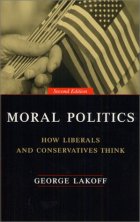
In this classic text, the first full-scale application of cognitive science to politics, George Lakoff analyzes the unconscious and rhetorical worldviews of liberals and conservatives, discovering radically different but remarkably consistent conceptions of morality on both the left and right. For this new edition, Lakoff adds a preface and an afterword extending his observations to major ideological conflicts since the book’s original publication, from the impeachment of Bill Clinton to the 2000 presidential election and its aftermath.
In Thinking Points, George Lakoff and the Rockridge Institute not only offer a deep understanding of the progressive worldview, but also reveal the nature of the so-called political center. They show why the most effective way to appeal to those who identify themselves as moderates is to remain true to core progressive values. Download “Thinking Points” in its entirety here.
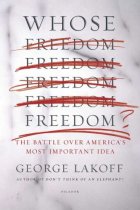
“Freedom” is one of the most contested words in American political discourse. In Whose Freedom? The Battle Over America’s Most Important Idea, George Lakoff describes how the country is divided by two dramatically different worldviews, cognitive frames that determine how we think about economic policy, religion, science, foreign affairs – and freedom.
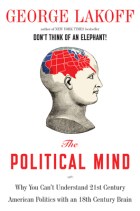
Why You Can’t Understand 21st-Century American Politics with an 18th-Century Brain
In his new book, Lakoff spells out what cognitive science has discovered about reason, and reveals that human reason is far more interesting than we thought it was. Reason is physical, mostly unconscious, metaphorical, emotion-laden, and tied to empathy-and there are biological explanations behind our moral and political thought processes. His call for a New Enlightenment is a bold and striking challenge to the cherished beliefs not only of philosophers, but of pundits, pollsters, and political leaders. The Political Mind is a passionate, erudite, and groundbreaking book that will appeal to anyone interested in how the mind works and how we function socially and politically.
The FrameLab Book Club is launching in 2025! First on the list: “The Political Mind: A Cognitive Scientist’s Guide to Your Brain and Its Politics” by Dr. George Lakoff. Nearly 400 readers have signed up to participate! This online book club will feature personal insights from Dr. Lakoff, as well as an ongoing Q&A with […]
It happened. Donald Trump defeated Kamala Harris. A twice-impeached convicted felon who has promised to act as a dictator will return to the White House in 2025. There’s no way to sugarcoat this nightmare scenario. The consequences of this election will unfold for decades to come. They will likely prove destructive to the very fabric […]
To stay abreast of Dr. George Lakoff’s latest work, please subscribe to the FrameLab Newsletter (it’s totally free!). In the current essay, “Kamala Harris and the Strategy of Joy,” Dr. Lakoff talks about the important role of emotion in political campaigns: “Joy is powerful because it plays on your emotions. And your emotions are everything […]
From George Lakoff and Gil Duran at the FrameLab Newsletter: Moderate and centrist are political weasel words. Their definitions vary widely because there is no such thing as a moderate or centrist ideology. There is no united “middle” or “center” in politics, no single set of ideas on which all moderates or centrists agree. Some […]
Big news: FrameLab just hit a major milestone — 10,000 total subscribers! Thank you so much for reading. If you can afford it, please consider becoming one of our paid subscribers. Because your support makes a big difference. — George and Gil Part 3 in the Moral Warfare 101 series: Ninety-eight percent. That’s an estimate of how much […]