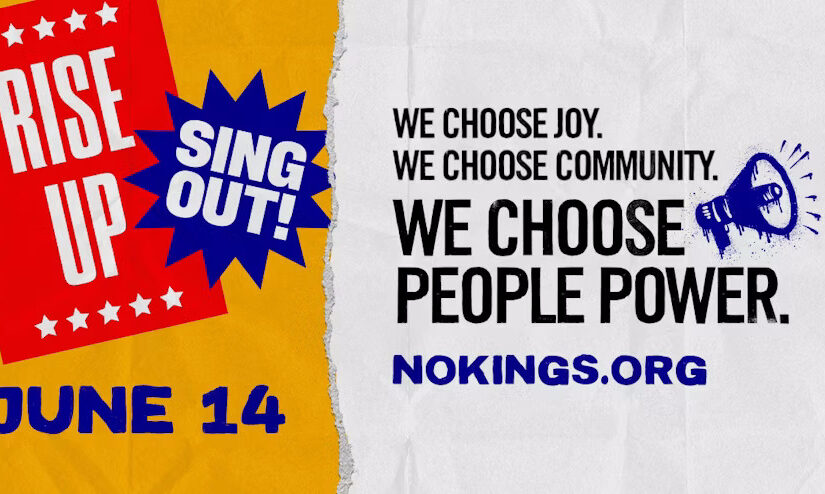
On June 14, join us for Rise Up, Sing Out: A Concert for the First Amendment — an uplifting evening of music, community, and action. Hosted by the Committee for the First Amendment (CFA), this special livestream event will feature an all-star lineup including Jane Fonda, Patti Smith, Bette Midler, Rufus Wainwright, Joy Reid, Wilson Cruz, Broadway Inspirational Voices, and more.
Together, we’ll celebrate the freedoms guaranteed by the First Amendment — including the freedoms of speech, religion, press, assembly, and protest — and the people power that protects them. Communities across the country will gather for local watch parties to livestream the 90-minute concert beginning at 4:30 p.m. PT / 7:30 p.m. ET.
Join us to sing along, connect with neighbors, share food and creativity, and celebrate the power we build when we come together. Whether you’re a longtime organizer or brand new to the movement, you’re invited to an evening of joy, inspiration, and collective action in support of democracy and freedom.
A core principle behind all No Kings events is a commitment to nonviolent action. We expect all participants to seek to de-escalate any potential confrontation with those who disagree with our values and to act lawfully at these events. Weapons of any kind, including those legally permitted, should not be brought to events.
Sponsored by Indivisible Portola Valley & Indivisible Palo Alto Plus.
By M. Gessen, an Opinion columnist, and Mr. Bartha reported from Budapest.
Publisher: The New York Times
Recommended by: Bob B. and Bruce R.
Starting early in the morning on the second Saturday of May, first hundreds and then thousands of people gathered in the square in front of Hungary’s majestic Parliament building to celebrate the start of a new political era. This was the square where tens of thousands gathered in 1956 and 1989 to demand an end to the Soviet occupation and in 2006 to protest a discredited government. It was the square on which Prime Minister Viktor Orban’s regime imposed a major redesign more than a decade ago — with traffic rerouted away, a large reflecting pool and raised beds installed, narrow pathways laid down — apparently to ensure that no such mass gathering could take place again. Today it was the square where Peter Magyar, a former Orban loyalist, would be sworn in, promising a rebirth of democracy and liberty after 16 years of autocratic control.
Squeezing into the available spaces and gradually filling up nearby cafes and streets, the crowd absorbed people of all ages: young people who didn’t remember a time before Orban and who had voted in unprecedented numbers; aging intellectuals who didn’t think they’d ever celebrate their country again; multigenerational families who had arrived by bus after seeing Magyar in their hometowns and villages. During his campaign, Magyar had traveled to an estimated 700 locations, turning many of them into “Tisza islands” — outposts of support for his party. By the end, Magyar was holding five or more rallies a day.
It had looked like an impossible quest. Orban and his cronies dominated the media, persecuted and smeared opposition politicians and changed election laws to benefit his party, Fidesz. Orban had seemed to achieve what the Hungarian sociologist and political theorist Balint Magyar (no relation) calls “autocratic breakthrough” — the point after which it’s impossible to unseat an autocrat using elections. Illiberal politicians from other countries made pilgrimages to Hungary to learn from Orban; CPAC, the gathering for American national conservatives, started staging an annual convention there; and Vice President JD Vance visited Budapest in advance of the election, in a show of support for Orban. And yet Hungarians handed Tisza not just a victory but a constitutional majority, enough power to reverse Orban’s changes to Hungarian laws and institutions. The triumph was stunning — unique in our era of democratic backsliding — and it holds clear lessons for the United States.
Summary of the 10 main points
One obvious lesson of Peter Magyar’s success lies in the scale, reach and relentlessness of his organizing network. “They had 2,000 Tisza islands with between 30,000 and 50,000 volunteers,”
Old-fashioned in-person politics can be a powerful antidote to media fearmongering.
Third lesson: Don’t mince words. Peter Magyar… [borrowed] a term coined by Balint Magyar, he has called it a mafia state — a fundamentally criminal enterprise.
Magyar’s credibility lay in the fact that he was not a member of the old opposition, whose policies had led to the discontent that made Orban’s rise possible and whose timidity had helped perpetuate Orban’s power.
That’s a fifth lesson: Grass-roots organizations that have little or no connection to electoral politics — in the United States, that might be the networks formed by the No Kings rallies, ICE-resistance groups and so on — can matter as much as or more than those already focused on winning votes.
Another lesson lies in the issues that motivated Magyar’s voters. Hungarians seemed to see the damage that Orbanism had done to the nation as more important than any harm they felt they had suffered as individuals. They were united by a sense of moral outrage
In some U.S. coverage, Magyar has been labeled centrist or right-of-center. What his politics actually are — and this is another lesson of his victory — is pluralist.
a child sexual abuse scandal and a cover-up also appear to have played a significant role. Perhaps this is because such stories can shed a particularly harsh light on networks of power, and the abuses of power.
Everyone I interviewed in Hungary insisted that regime change would not be complete until a full accounting of the abuses of the Orban regime had occurred and those guilty of crimes were punished
another lesson of Magyar’s victory: His politics are aspirational and inspirational, a tone that is an antidote to the cynicism and vulgarity of autocracy.
In Magyar’s address:
“…rediscover how to see ourselves as a community once again,” he said. “Therefore, I ask you to turn toward those compatriots who are disappointed today, who are afraid, or who experience this period as a loss. Do not try to defeat them; do not look down on them. Listen to them and talk to them. Tell them that this country belongs to them, too; that they are needed, just as everyone is needed; and that together, we will rebuild Hungary, because there is no left, there is no right — only Hungarians.”
By Gal Beckerman Apr 21, 2026 Publisher: Crown Recommended by: Bruce R
An invigorating guide to fighting back—part philosophy, part history, and part manual for living with integrity in an age of conformity and authoritarian drift
How do we push back in a world where political leaders wield fear and intimidation? Where digital technology dehumanizes and flattens us? We need role models, and in this engaging book, acclaimed writer Gal Beckerman goes looking for them. Drawing on the stories of dissidents from around the globe and across time, from Socrates to Ai Weiwei, and thinkers like Hannah Arendt and Iris Murdoch, Beckerman reveals the defining characteristics these extraordinary figures share, a set of attributes and practices for anyone navigating the pressures of modern tyranny.
Structured around ten qualities—among them, Be Pessimistic, Be Funny, Be Reckless, and Be Immortal—this illuminating, surprising book blends intellectual history, biography, and cultural criticism. It charts a dissident’s journey from the solitary moment of recognizing the truth, through the risks of speaking it, to the legacy that can outlast a life. What makes dissidents tick? And how might we change when we encounter them?
Urgent and inspiring, Beckerman’s book shows that dissidence is a human capacity we can all cultivate, a refusal to betray one’s inner voice, no matter the cost. In a polarized America and a world sliding toward authoritarianism, we need dissidents—not only the jailed and martyred, but also those of us who face small daily compromises of conscience. How to Be a Dissident lights the way.
How To Resist Authoritarianism Without Losing Yourself | Gal Beckerman VALOR Media Network and Kristofer Goldsmith (May 27, 2026)
Not in theory. Not in history books. Right now.
In this episode of On Offense, Kris Goldsmith speaks with Atlantic staff writer and author Gal Beckerman about his new book, How to Be a Dissident, and the deeper psychological questions raised by life under rising authoritarianism.
This conversation explores conformity, moral courage, propaganda, normalization, and the pressures that cause ordinary people to stay silent while democratic institutions erode around them.
But more importantly, we discuss what makes dissidents different, and Beckerman’s ten rules that shape them.
Drawing from dissident movements across history — and from the lived reality of the second Trump administration — Beckerman argues that resistance begins long before politics. It begins with the refusal to normalize cruelty, corruption, fear, and obedience.
Together, Kris and Gal discuss:
Why authoritarianism depends on adaptation and exhaustion
How propaganda reshapes identity and social behavior
The psychological pressure to conform
Why some people comply while others “sit apart”
The role of community and “neighborism” in resisting authoritarian politics
Why “hopeful pessimism” may be necessary for democratic survival
What integrity looks like in moments of democratic decline
This is a conversation about how human beings behave when institutions fail — and how we choose who we become in the process.
Let’s be honest: this year has been a bit of a dumpster fire. Here at Red Wine & Blue, we’ve been hearing women in our community say they’re not sure how to make a difference — at least, not without totally losing their shit.
So we decided to tackle that question head-on with a brand-new podcast. It’s simply called How To Not Lose Your Sh!t and it’s hosted by our very own Katie Paris and LaFonda Cousin.
Katie, our founder, has worked in political organizing for most of her career. LaFonda, our Chief People Officer, is a wellness expert and yoga teacher on a mission to reimagine self-care. Every week, they’ll talk to experts and everyday women who are getting involved, building community, and feeling better in the process.
You can listen to our first episode with special guest Heather Cox Richardson on October 1st, with new episodes every Wednesday after that. If you’re already subscribed to the Red Wine & Blue podcast in your podcast player, you’ll automatically see new episodes each week here in your feed.
There are a lot of political podcasts out there already, and a lot of mental health and self-care shows too. What we want to do is reject that binary and explore how getting involved can actually be a form of not only caring for your community, but also yourself. We can’t wait for you to join us on a journey through self-care, politics, community, and tackling this difficult moment… together.
If it feels like America is sliding deeper into darkness—with voter suppression, book bans, gag orders, and fear spreading daily—you’re not alone. The truth is, fascism thrives when good people hesitate, but democracy grows stronger when ordinary people take action. You don’t need the full roadmap to change the world; you just need to take the next best step. Even the smallest action—whether it’s organizing in your community, speaking out at a school board meeting, or showing up for your neighbors—can disrupt authoritarianism and build momentum for lasting change. In this video, I’ll share why action is the antidote to despair and how you can start making a difference today, no matter your resources or time. History shows us that small acts, multiplied by thousands, topple regimes and create movements. Don’t wait for the “perfect” moment or the “perfect” leader—your courage matters now.
A FREE GUIDE FOR PROGRESSIVE LEADERS READY TO CREATE LASTING IMPACT
Across the country, authoritarian forces are getting bolder and more dangerous. Trump and his allies are not hiding their agenda: mass deportations, rollbacks of civil rights, weaponized courts, and full-scale attacks on our democracy. We don’t have to wait until it’s too late. We can stop this. But it’ll take all of us—not just single days of mass action, but sustained organizing in our communities.
That’s why this summer, we’re launching One Million Rising—a national effort to train one million people in the strategic logic and practice of non-cooperation, as well as the basics of community organizing and campaign design. This is how we build people power that can’t be ignored. You’re invited to join us—and lead.
You can visit the site to see the recorded videos and access the training materials.
But we have more problems than warming the planet. Even if we control the temperature by reducing our CO2 emissions, there are many other ecological problems caused by humans: deforestation, desertification, disruption of water cycles, plastic pollution, insect decline, fishery collapses, and fuel resource depletion. The list goes on and on. “It is no accident that the ruins of the world’s oldest civilizations are mostly in deserts now. It wasn’t desert before that.”
Our human institutions are unwilling (or unable) to address these problems with real solutions. We created these institutions—corporations and governments, most notably—but we seem unable to control them. They have morphed into alien entities that now control us.
The smallest effective human-powered unit is a community, not an individual. However, tight, effective communities have been hobbled. It is time to relearn how to build communities, and then to do the work of taking back our government. At the same time, large organizations can be reformed or broken up, with non-violent actions, to remind them that they exist for humans, not themselves.
Why the Modern Male Is Struggling, Why It Matters, and What to Do about It
by Richard V. Reeves
Publisher: Brookings Institution Press
Recommended by: Bob B.
“The problem with men is typically framed as a problem of men,” writes Reeves. “It is men who must be fixed, one man or boy at a time. This individualist approach is wrong.” Instead, he maintains there are structural problems, societal issues, that need to be addressed if men are not to become ever more lost, defeated and angry.
Using Convergent Facilitation to Reach Breakthrough Collaborative Decisions
by Miki Kashtan
Miki introduces a novel decision-making process called Convergent Facilitation that builds trust from the beginning, surfaces concerns and addresses them, and turns conflicts into creative dilemmas that groups feel energized to solve together. This highly effective process has been used successfully around the world to resolve problems and teach people how to collaborate without sacrificing productivity.
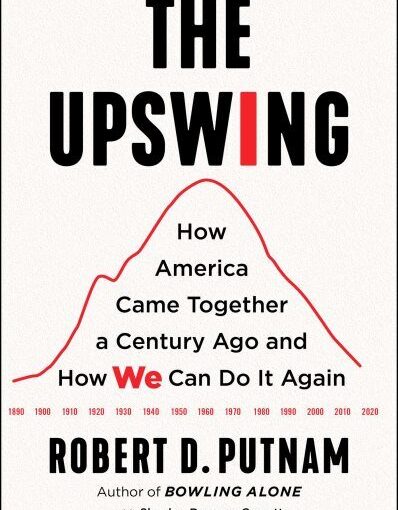
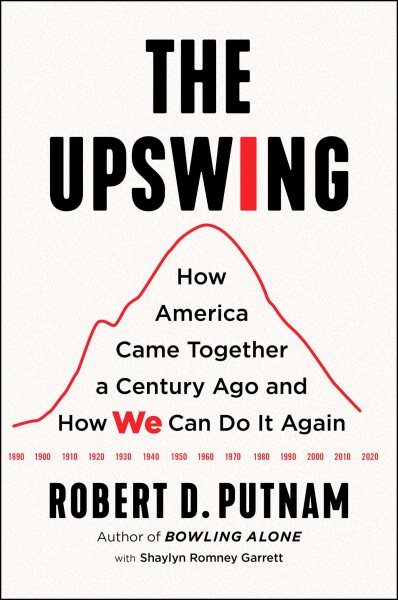
how America came together a century ago and how we can do it again
by Robert D. Putnam
and Shaylyn Romney Garrett.
Publisher: Simon & Schuster
“An eminent political scientist’s brilliant synthesis of social and political trends over the past century that shows how we have gone from an individualistic society to a more communitarian society and then back again — and how we can use that experience to overcome once again the individualism that currently weakens our country”
We can’t go back to when things were “good.” But we can learn from when things ware “bad.” In the early 1900’s the Guilded Age of the robber barons, things were really bad for most US citizens; they feared for the end of democracy and the take-over by the oligarchs.
Recommended by: Bob B. – “Convergence Center for Policy Resolution, provides services and training for those wishing to transform conflict into collaboration.”
In a country marred by deep conflict, city, county, and state officials face mounting pressure to engage diverse stakeholders in resolving contentious and complex public policy issues. The Convergence Learning Lab’s training and consultation services empower leaders with the necessary skills to bridge these divides resulting in more productive public meetings, more constructive community engagement, and, ultimately, better outcomes for constituents.
Lab services are built on our unique, evidence-based collaborative problem-solving methodology which has been used to successfully address seemingly intractable political, social, organizational, and community-based issues.
Our process has proven consistently successful at producing the kinds of results that drive impact.
Convergence’s success offers a beacon of hope for the majorities of Americans frustrated by divisiveness that change is not only possible, but that we have the tools and the knowledge to bridge even the starkest divides with consistency. In addition, our success highlights the rich set of tools, practices, and resources that others can use to achieve similar successes.
We select issues that are ripe and amenable for Convergence and stakeholder-participants to collaboratively “unstick,” and frame a discussion-onramp to the issue that is both crucial and disarming.
We convene diverse tables of participant leaders and doers, many of whom oppose each other so stridently they never thought they could talk to one another.
We facilitate participants to build trust, find common ground. Participants abide by a set of ground rules including honoring all points of view, respecting the confidentiality of the conversation, and listening carefully when others speak.
We generate consensus solutions collaboratively among dialogue participants through establishing guiding principles that create a framework for the policy discussions to come. Once stakeholders are aligned on a bigger vision, they are ready to work together to produce new ideas and solutions.
We deliver societal impact and on-the-ground implementation of the solutions. By design, a Convergence project strives to engage stakeholders to take action on their ideas after the dialogue stage is completed, or in some instances, even while the dialogue is going on. Convergence itself does not formally endorse stakeholders’ proposals – it remains policy neutral – but often plays a stewarding role to maximize the impact stakeholders can achieve.
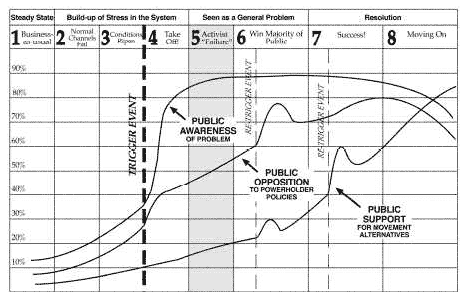
This article is a comprehensive strategic framework for nonviolent revolution, combining historical case studies, practical organizing guidance, and theoretical insights about movement building.
A Strategic Framework Describing The Eight Stages of Successful Social Movements
by Bill Moyer
Publisher: History Is A Weapon
Recommended by: BruceR
Within a few years after achieving the goals of “take-off”, every major social movement of the past twenty years has undergone a significant collapse, in which activists believed that their movements had failed, the power institutions were too powerful, and their own efforts were futile. This has happened even when movements were actually progressing reasonably well along the normal path taken by past successful movements!
The Movement Action Plan (MAP) was first published as the Fall 1986 edition of the Dandelion. Twelve-thousand copies were published and distributed. This is a revised edition of that article. People are invited to participate in the continuing development of MAP and help spread it to local groups.